

Workplace giving—payroll deductions, donation matching, volunteering, paid volunteer time off (VTO), and volunteer grants—unlocks $5 billion annually in U.S. charitable support. Yet most programs limp along with low participation: traditional payroll/matching often sees just 10-20% engagement, while volunteering averages 33%.
The issue isn't a lack of employee generosity. It's outdated designs that don't align with modern behaviors and expectations.
At ShopRaise, we help nonprofits and companies rethink workplace giving: turning it from a checkbox HR benefit into a dynamic, habit-integrated program that drives real results. Below, we break down the eight core challenges holding most programs back—and the modern fixes that can transform them.
1. Low Participation Isn’t a Motivation Problem — It’s a Design Problem
Most workplace giving programs rely on a single entry point: payroll deduction enrollment. That sounds simple, but in practice it creates a major bottleneck. Employees must make a long-term financial decision, during a narrow window, often with little context or urgency.
That friction quietly eliminates the majority of potential participants before they ever engage.
Programs that break through this barrier widen the front door. They offer low-commitment ways to participate alongside payroll giving — options that feel easy to start and easy to stop. When giving fits naturally into existing behavior instead of requiring a formal sign-up, participation grows quickly.

2. Engagement Tapers Off After the Launch Buzz
Annual campaigns create initial excitement, but without ongoing touchpoints, momentum fades quickly. Employees get busy, and one-off drives fail to integrate giving into daily life, leading to drop-offs after the launch. This is especially true in programs relying solely on seasonal pledges, ignoring year-round opportunities like volunteering or passive matching.
When something shows up once a year, employees treat it like a task — not a habit.
The fix is frequency without friction. The most successful programs create small, ongoing moments of engagement interspersed throughout the year by tying giving to everyday actions. Giving stays visible, but it never feels like another campaign to manage or another ask to ignore.
Learn more about how ShopRaise can skyrocket your Workplace Giving participation
learn more at ShopRaise.com/Workplace-giving
3. Too Few Choices for Employees
Employees today want to support causes they care about deeply—whether local animal shelters, global climate efforts, or community health initiatives. A limited, one-size-fits-all charity list leaves passion (and potential donations) untapped. In fact, 30% of non-participants cite lack of preferred causes as their reason for opting out.
When employees don’t see themselves reflected in the program, they disengage quietly.
Programs that perform well preserve simplicity for administrators while expanding choice for employees. They recognize that personalization doesn’t complicate giving — it activates it. When people can support causes they genuinely care about, participation becomes voluntary instead of forced.
4. Payroll Deduction Has Real Limits
Payroll deduction has been the foundation of workplace giving for decades, but it comes with real psychological weight. For many employees, recurring deductions feel permanent, risky, or poorly timed — especially during periods of economic uncertainty.
Even employees who want to give often delay enrolling simply because the commitment feels too heavy.
Programs that grow treat payroll giving as one option, not the only one. By layering in additional programs, like Volunteering, In-Kind Donations and Shopping programs, they capture engagement from employees who would otherwise sit out entirely — expanding reach without replacing what already works.

5. Impact Feels Abstract When It’s Hard to See
If employees can’t easily see the impact of their participation, motivation drops. If program managers can’t clearly measure engagement, it becomes harder to justify internal support. Delayed reports and vague summaries don’t drive momentum.
Programs that grow make impact visible and understandable. They surface participation trends, engagement signals, and outcomes without requiring manual work. When impact is clear, giving feels real — and when it feels real, people stay engaged.

youtube.comCharity Hub CRM - Reporting & Business Intelligence with Excel and Power BI Integration
6. Admin Complexity Chokes Growth
Workplace giving often creates more internal friction than expected. Payroll integrations, compliance requirements, manual reporting, and ongoing promotion all add up. When a program is difficult to manage, it becomes harder to expand and easier to deprioritize.
The programs that scale are the ones that reduce operational burden. They minimize integrations, automate tracking, and remove unnecessary steps for internal teams. Simpler programs don’t just save time — they get promoted more often, which directly impacts participation.
Learn more about how ShopRaise can skyrocket your Workplace Giving participation
learn more at ShopRaise.com/Workplace-giving
7. Communication Tools Are Underutilized
One enrollment email per year isn’t cutting it—but creating quarterly campaigns manually is exhausting. Employees miss opportunities to engage through matches, volunteer events, or everyday actions because reminders aren't tied to natural behaviors.
Programs that work rethink communication entirely. Instead of repeatedly asking employees to give, they focus on reminding employees that giving is already happening — embedded into normal behavior. This subtle shift reduces fatigue and keeps giving top of mind without constant outreach.
8. The One-Dimensional Model Is Outdated
Employees expect flexibility, personalization, and ease in nearly every aspect of work — from benefits to collaboration tools. Workplace giving shouldn’t be the exception. Programs that offer only one way to participate will always cap their potential.
The most effective workplace giving programs operate as ecosystems, not lanes. They combine payroll giving, matching, volunteering, events and everyday giving into a cohesive experience. This is where solutions like ShopRaise Workplace Giving fit naturally — adding an everyday giving layer that complements existing programs and expands participation without adding cost or complexity.
What a Modern Workplace Giving Program Looks Like
The programs that succeed today don’t rely on a single model or a single moment. They lower barriers, expand participation paths, and meet employees where they already are. They make giving easier for employees and simpler for program managers — and they see the results in engagement, culture, and impact.
Workplace giving isn’t broken — it’s unfinished. The programs that perform best don’t rely on a single model. They combine a variety of fundraising and engagement strategies to maximize participation:
- Broad cause choice across nonprofits, causes, and giving types so employees can support what matters most to them.Payroll giving and employer matching that amplify impact for employees who want a more traditional, predictable way to give.
- Volunteerism and incentive-based engagement, including volunteer grants and VTO, that recognize time as a meaningful form of contribution.
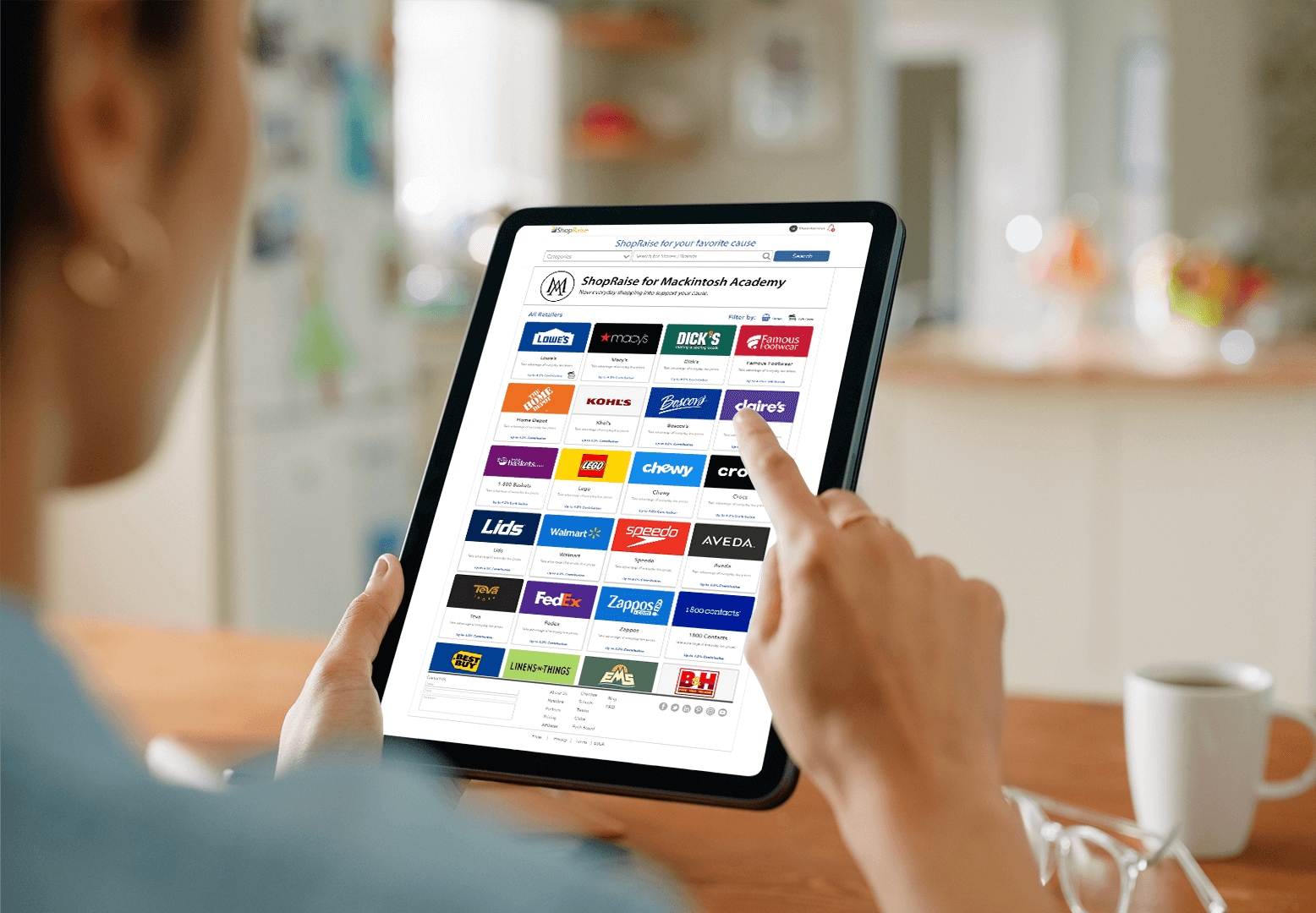
- Everyday giving through shopping that turns routine purchases into automatic donations — lowering the barrier to entry and driving consistent, year-round participation.
- Simple administration and clear reporting that reduce internal lift while showing real, measurable impact to both employees and leadership.
When workplace giving is built as a connected ecosystem — not a one-dimensional program — participation grows naturally and sustainably.
This isn’t futuristic—it’s what forward-thinking companies are achieving today with ShopRaise, evolving workplace giving beyond outdated models.
Ready to fix the barriers holding your program back? Learn more at learn more at ShopRaise.com/Workplace-giving and see how easy modern workplace giving can or: