

Employee engagement in the United States has fallen to its lowest level in 15 years. According to a new report from Gallup, just 29% of U.S. employees were engaged in their work during the third quarter of 2026.
That's a pretty concerning number for employers. They spend a lot of time and money trying to attract and retain employees, offering benefits and creating a positive workplace culture. But are those efforts actually helping employees feel connected to the organization they work for?
Offering good benefits is important, but it doesn't necessarily mean employees are engaged. I think that's something employers need to take a closer look at.
A Decade of Progress Followed by a Reversal
Employee engagement had been improving for years. Between 2011 and 2020, Gallup reported a steady increase as employers put more attention into workplace culture, employee experience and management practices.
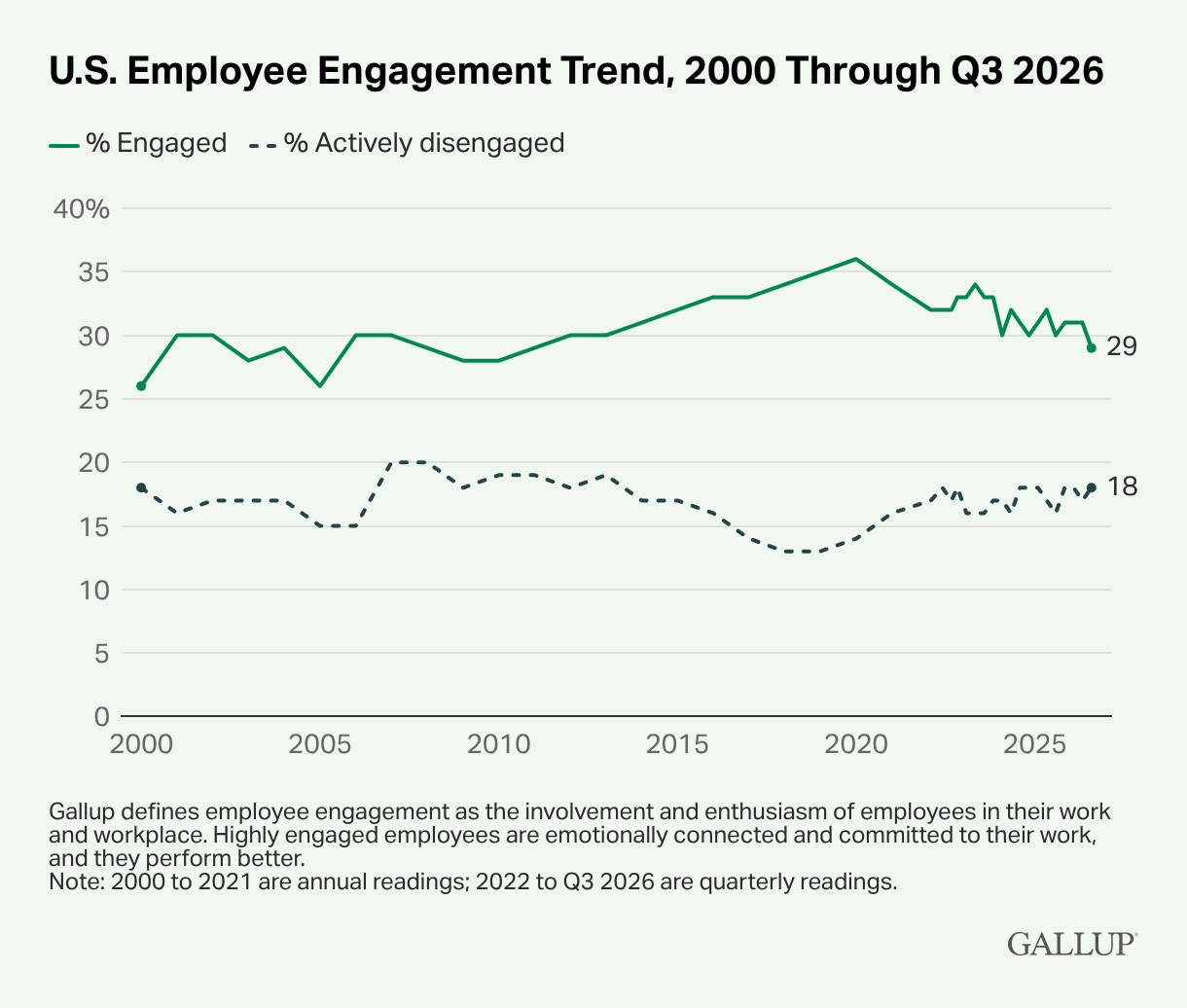
That changed after 2020. The pandemic changed how people worked, how teams interacted and how employees connected with their employers. Remote work, organizational changes and shifting expectations all played a role in creating a different workplace environment.
Today, employers are also dealing with rising costs, particularly when it comes to employee benefits. Health insurance premiums continue to increase, putting additional pressure on already tight budgets. Many employers are being forced to look at their benefit spending and make difficult decisions about what they can afford to offer, reduce or eliminate. At the same time, they still need to attract and retain employees and find ways to keep them engaged.
Since 2020, employee engagement has continued to decline. Employers have had several years to adjust to these changes, but the numbers haven't improved.
It's worth asking why. After years of focusing on employee experience and workplace culture, what are employers missing?
The Employee Engagement Numbers Tell a Troubling Story
Gallup's October 2026 report shows just how much engagement has declined.
- Only 29% of U.S. employees are engaged.
- 53% are not engaged.
- 18% are actively disengaged.
Another number caught my attention. Only 37% of employees strongly agree that someone at work cares about them as a person. That was 40% during the first half of 2026.
That says something about the employee experience beyond salary, benefits and job responsibilities. People want to feel that they matter to the organization they work for.
Employee Benefits Don't Automatically Create Engagement
Employers spend a lot on employee benefits. Health insurance, retirement plans and paid time off are important. They help attract employees and make an organization a more competitive place to work.
But benefits and employee engagement are two different things.
Most traditional benefits focus on what employees receive. They don't necessarily give employees more ways to participate, interact with their coworkers or feel connected to the organization.
That doesn't mean employers should spend less on benefits. It means they should also think about what they're doing to keep employees involved once they've been hired.
Employee Engagement Can't Be a Once-a-Year Initiative
A lot of employers approach employee engagement through annual surveys, occasional recognition programs, company events or holiday activities.
Those things can be worthwhile, but they aren't necessarily creating ongoing engagement.
Employees need more opportunities to participate throughout the year. They need reasons to interact with the organization beyond their daily responsibilities.
The challenge for HR teams is finding ways to do this without adding another complicated program to manage or creating more work for an already busy department.
Give Employees Something They Actually Care About
One area I think employers should pay more attention to is social impact.
Employees have causes and organizations they care about. Giving them an opportunity to support those causes through their everyday activities is another way to create engagement.
It doesn't have to involve asking employees to donate money or spend their free time volunteering. There are other ways to make social impact part of the employee experience.
When employees can support causes that matter to them, it creates a connection between their personal interests and the organization they work for. It also gives them another reason to participate.
A Different Approach to Employee Engagement
ShopRaise is an AI-Empowered Employee Engagement & Retention Platform. We give employers simpler more effective way to engage employees by connecting everyday shopping with the causes they care about.
Employees can shop with participating retailers, access coupons and deals, and purchase gift cards. Those activities generate donations for the causes employees choose. The donations are funded by retailer marketing programs, so employees don't have to donate their own money or pay anything extra.
The idea is to give employers a way to create ongoing engagement without adding another complicated program for HR to manage.
Employers May Need to Rethink Their Approach
Employee benefits are important, but they don't solve every employee engagement problem.
If engagement continues to decline, employers may need to look beyond the benefits they offer and consider how they're creating a better employee experience.
Are employees being given reasons to participate? Do they feel connected to the organization? Are there opportunities to get involved in things that matter to them?
These are questions worth asking. Improving employee engagement isn't just about offering more benefits. It's also about finding ways to make employees feel like they're part of something.
About ShopRaise
ShopRaise is an AI-Empowered Employee Engagement & Retention Platform that helps employers create meaningful employee experiences through everyday shopping and social impact. Employees access deals, shop with participating retailers and generate donations for the causes they care about, at no cost to them.

Learn more at ShopRaise.